About Mounting
To protect and perfect
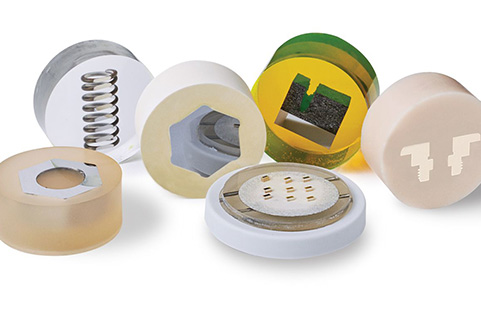
The purpose of mounting is to protect fragile or coated materials during preparation and to obtain perfect edge retention. Mounting is used when the protection of layers is imperative, and also it enables a safer and more convenient handling of small, sharp, or irregularly shaped specimens, for example.
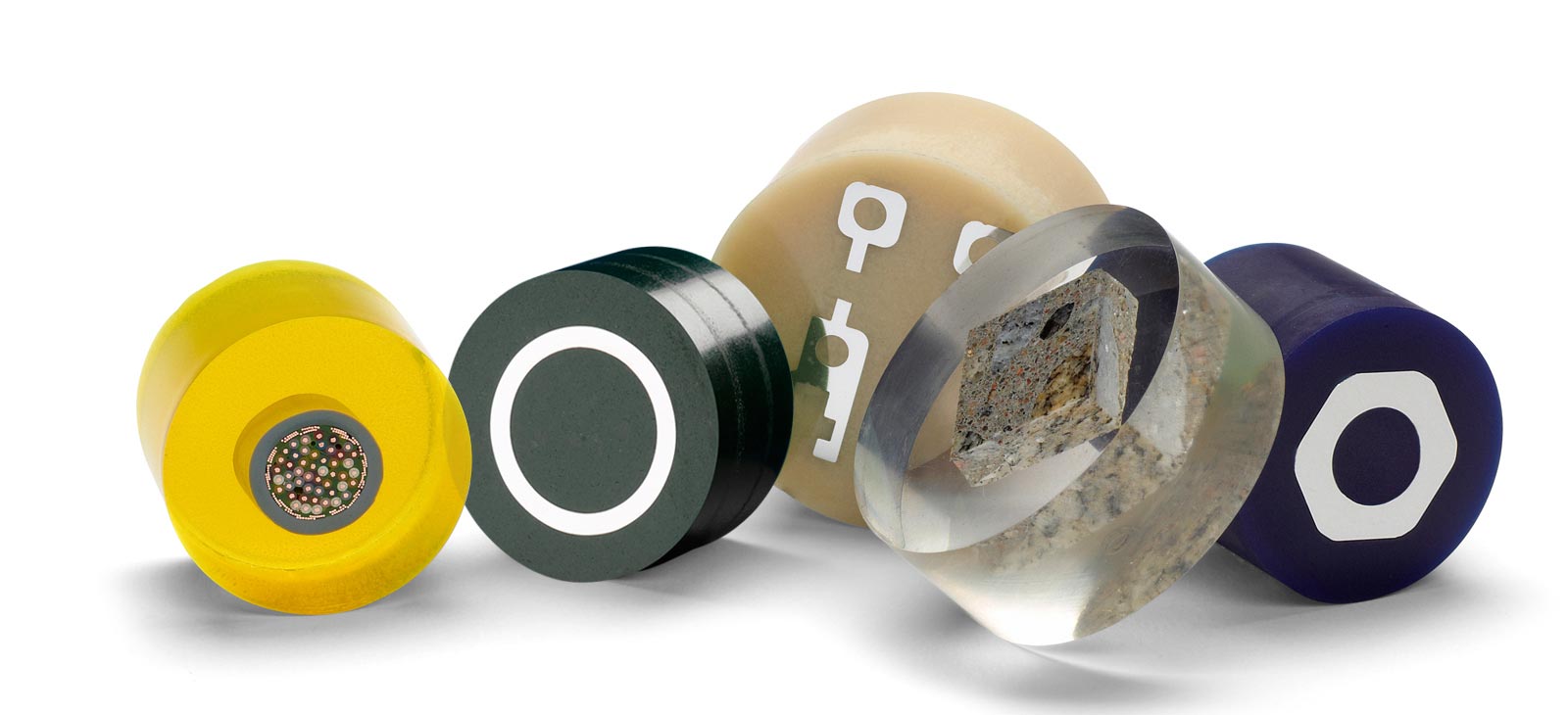
The best possible result
Specimens are embedded in resin to facilitate their handling and to improve the preparation result. For the best possible result, specimens should be cleaned prior to mounting. The best possible adhesion of resin to the specimen requires the surface to be free from grease and other contaminants.
Specimens that need perfect edge retention or protection of layers require mounting. However, it is worth considering whether the size or geometry of the specimen would make mounting unnecessary or even difficult. If this is the case, it might be better not to mount it.
Another consideration is whether or not the specimen can tolerate heat. If not, it is advised to refrain from using a mounting method that is likely to heat the specimen. Finally, consider that time can be saved by not mounting the specimen.
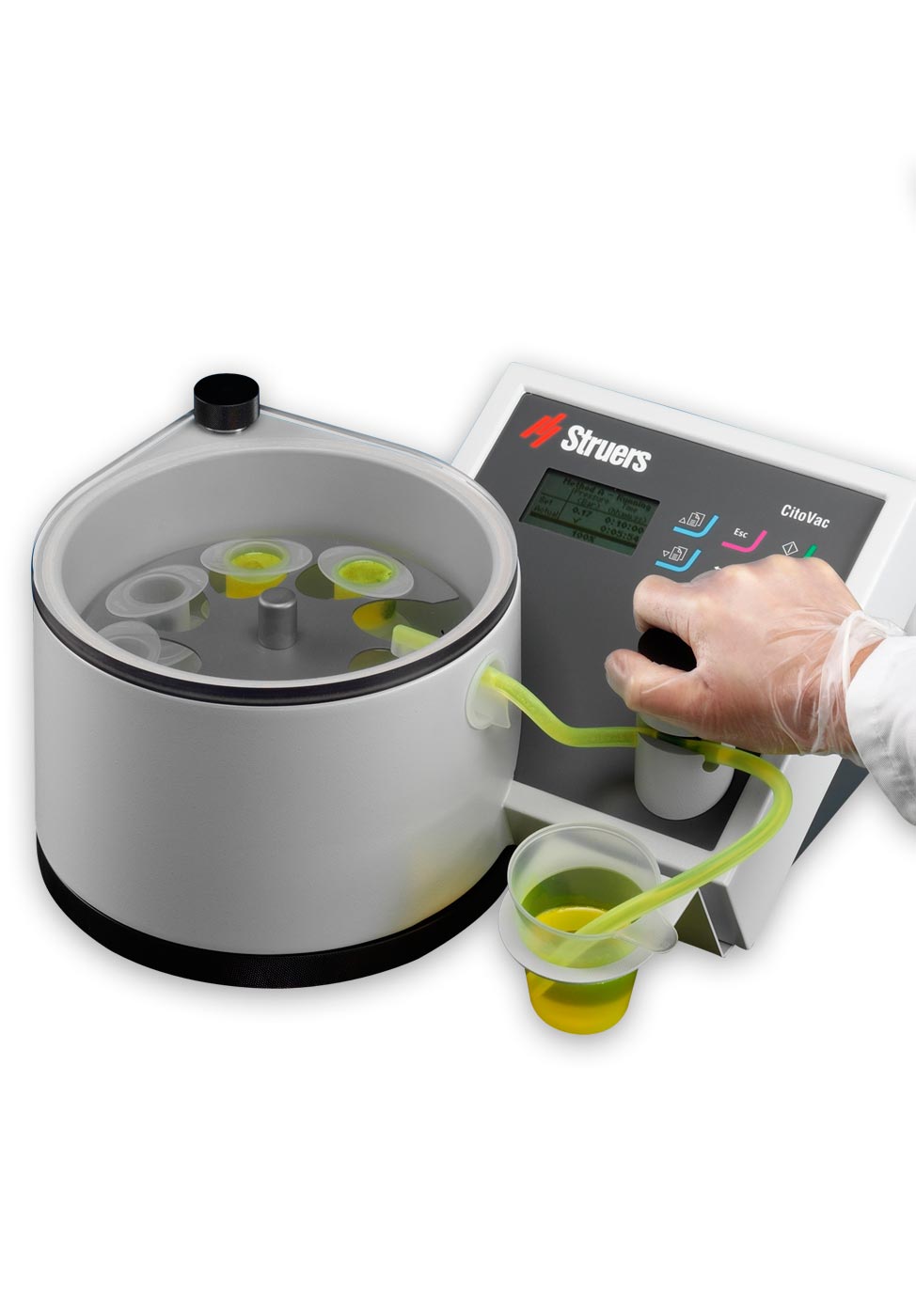
Cold mounting - the best result
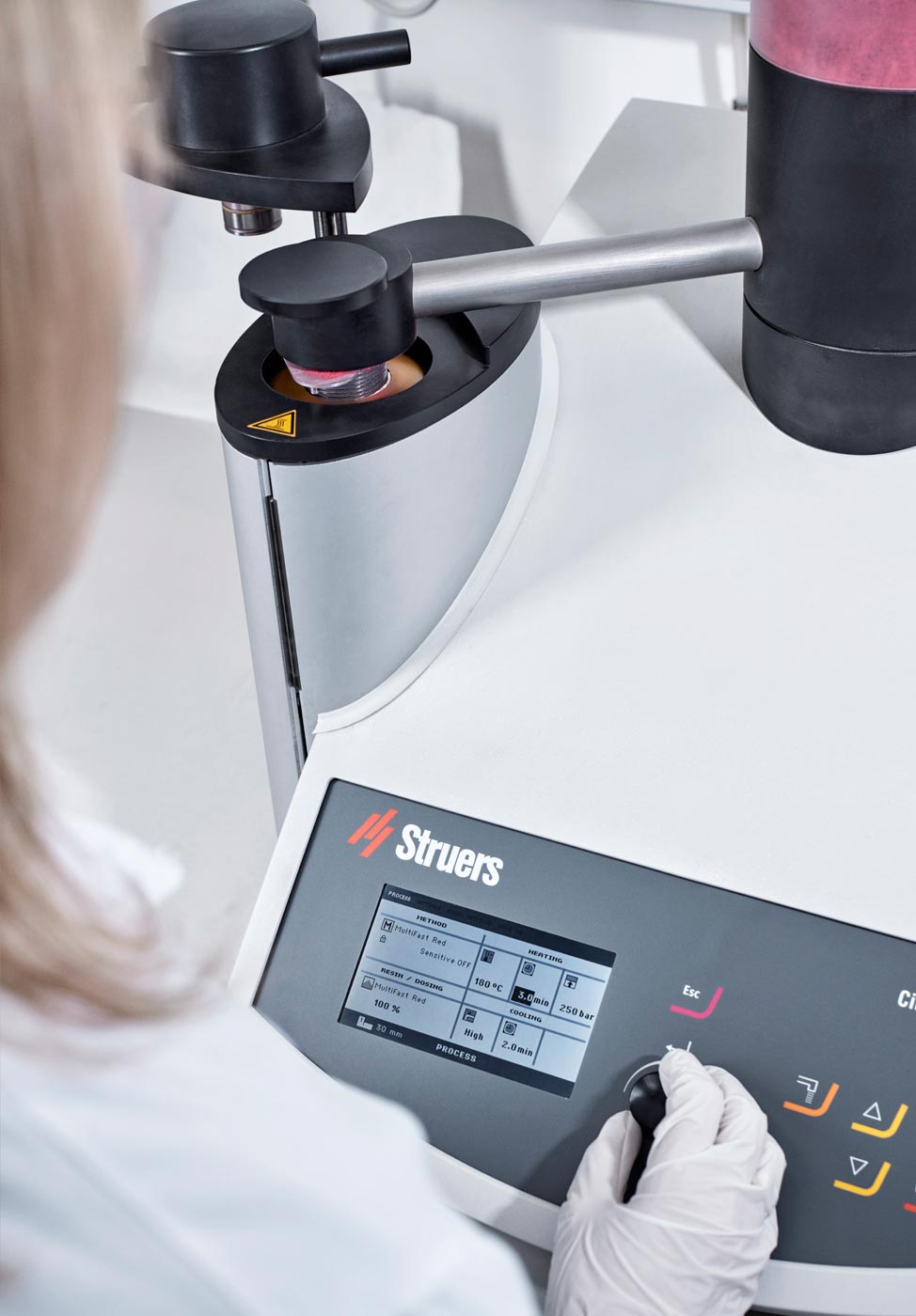
Hot mounting - the best result
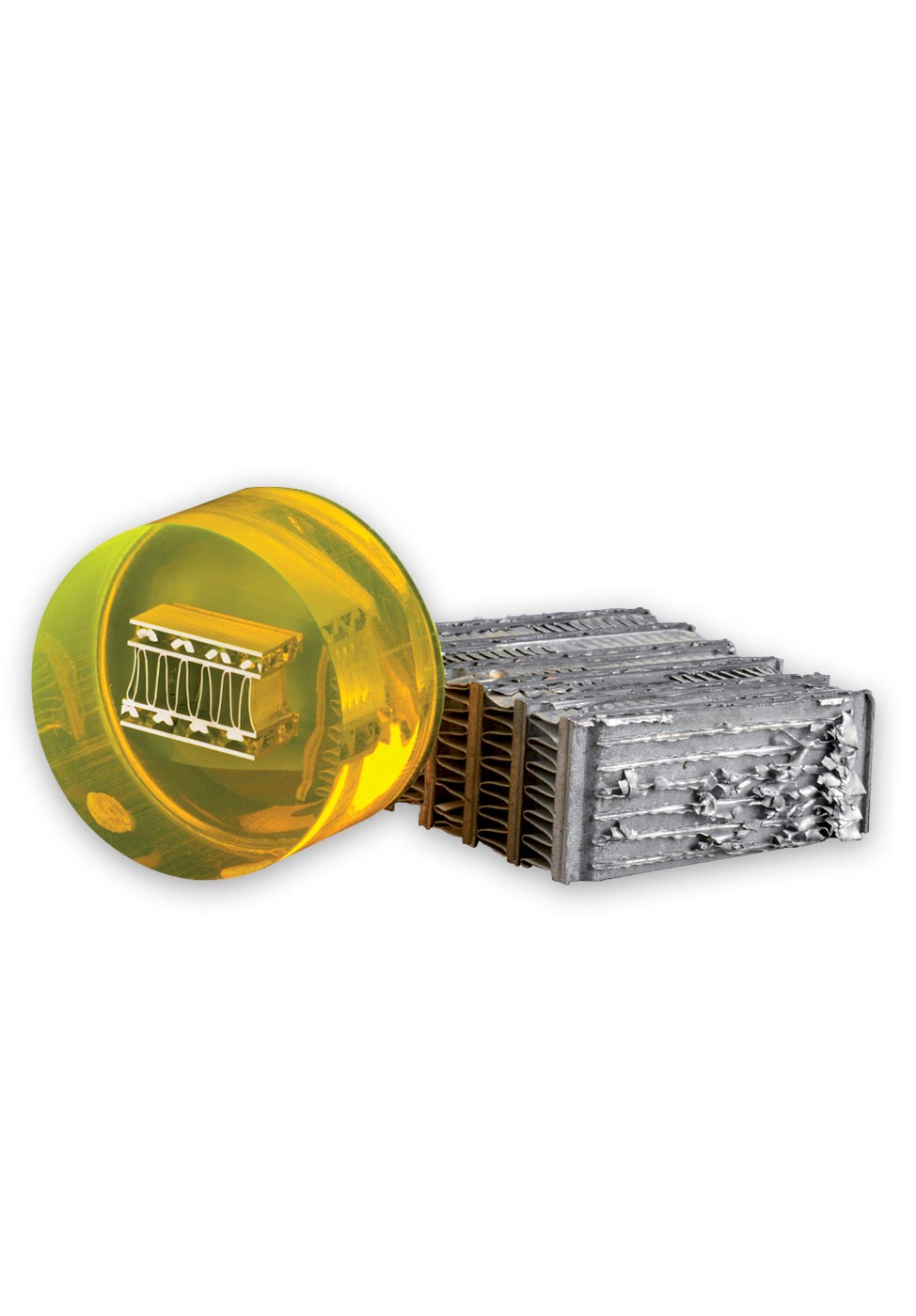
Porous specimens - the best result
When/Why Mounting?
- The specimen is small.
- The specimen has a complicated shape (it is therefore difficult to handle).
- Edge retention is necessary.
- Surface-hardened
- Layers
- Coatings (taper section)
- The specimen is porous or has cracks.
- Powder metallurgy
- Ceramics
- Petrographic specimens
- Failure analysis
- It is necessary that the size of the specimen is made uniform (for certain specimen holders for automatic preparation).
Unless the specimens to be prepared belong to these categories, there is no reason to mount them, as this takes time and money.
Mounting Techniques
Two techniques, hot compression mounting (also called hot mounting) and cold mounting are available for these different tasks, along with a number of resins.
Both mounting techniques offer certain advantages, depending on the number of specimens and the quality required.
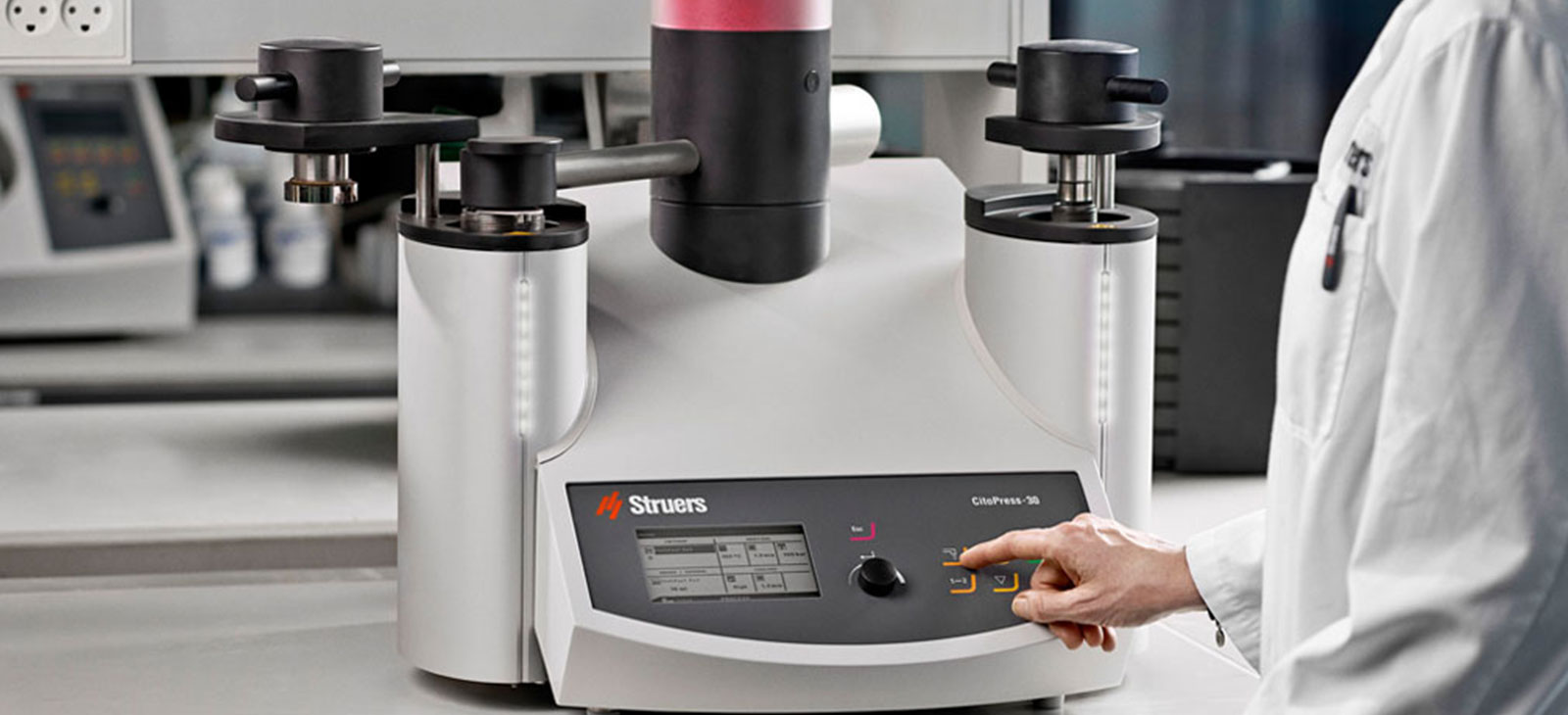
Is ideal for large numbers of specimens coming to the lab successively. The resulting mounts will be of high quality, uniform size and shape, and require a short process time. Hot mounting requires a mounting press that combines pressure with a high temperature.
Is suitable for a large series of specimens coming to the lab simultaneously, and for single specimens. Cold mounting by vacuum impregnation is used to reinforce and protect materials such as ceramics, plasma sprayed coatings, and specimens for failure analysis that require special care during preparation.
Mounting Equipment
Fast and user-friendly mounting equipment preserves the integrity of your specimens for high-quality preparation and productivity. You can choose between hot- and cold-mounting solutions whether you are looking for maximum speed or optimized accuracy and repeatability.
Looking for consumables?
Order your consumables directly from our Webshop.
Metallographic mounting insight | Struers.com
Learn how to improve the quality and speed of your hot and cold mounting processes – from choosing the right resin to dealing with temperature-sensitive samples – with expertise, tips and insight from Struers, the world’s leading materialographic and metallographic experts.